Those words are tasting notes, also called cupping notes. Think of them as your roadmap to the flavors hiding inside every cup.
Let's break down what cupping notes are, where they come from, and how to use them to find coffee you'll actually love.
What are cupping notes?
Cupping notes translate coffee's complex flavors into words you already know: fruit, flowers, nuts, chocolate. You'll see them on café menus and bean packaging.
🚫 Cupping notes are not added flavors.
If you see "orange" or "dark chocolate" on the label, it doesn't mean those ingredients were added to the coffee. These notes describe flavors that form naturally from the bean's terroir, variety, and roast. Nothing extra, nothing artificial. 😎
Bean notes = cupping notes.You'll see both terms used for the same thing.
Picking your first beans? Look at the cupping notes and choose the flavors closest to what you already enjoy.
Cupping notes: what the experts recorded
The SCA (Specialty Coffee Association) trains Q-Graders, certified coffee evaluators, to assess beans through a standardized tasting process called cupping.
- SCA: The world's largest specialty coffee organization, which sets quality benchmarks for the industry.
- Q-Grader: An internationally licensed coffee evaluator, the sommelier of the coffee world. They pass rigorous exams that test their ability to identify hundreds of distinct coffees.
- Cupping: A standardized tasting protocol where multiple coffees are prepared identically (same water temperature, grind size, and brew time) so only the bean's character is being evaluated.
Curious about pure origin character? Look for specialty beans that list cupping notes from a Q-Grader evaluation.
Tasting notes: how roasters interpret the cup
What you actually see in cafés are tasting notes written by the roastery, the company that roasts the beans.
Roasters study the cupping notes for a bean and use their roast profile to bring those flavors forward as clearly as possible.
They may adjust the roast level to emphasize specific notes. Lighter roasts tend to highlight fruit and floral notes, while darker roasts bring out chocolate and nuttiness.
In practice, "cupping notes" and "tasting notes" both describe a coffee's flavor, and most people use the terms interchangeably.
Buying beans at a café?Check the tasting notes to see whether the roaster's flavors match what you're in the mood for.
The four flavor families to know
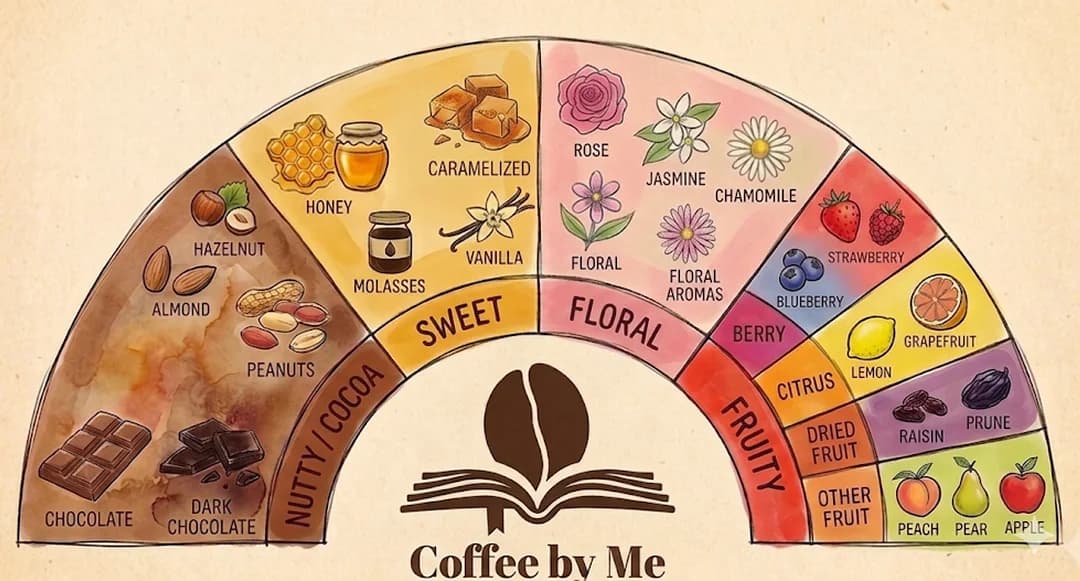
Cupping notes cluster into four broad families. Knowing which one you prefer makes choosing beans much easier.
🌰
Nutty & Cocoa
Bitter-sweet cacao and roasted almond or hazelnut aromas. The most approachable and widely loved cupping note profile, and ideal for beginners.
🍯
Sweet
Rich honey and caramel sweetness with a smooth, full body. A great pick if you want coffee that tastes naturally sweet with no sugar needed.
🌸
Floral
Delicate floral aromas reminiscent of jasmine or rose. Ethiopian Yirgacheffe is the classic example: light, fragrant, and tea-like.
🍓
Fruity
Vibrant fruit notes like blueberry, cherry and passion fruit, with lively, sweet-tart acidity. Great if you enjoy coffee that drinks almost like juice.
New to specialty coffee? Start with the Nutty & Cocoa family: familiar, low in acidity, and hard to dislike.
A simple process for picking beans you'll enjoy
Once you know your preferred flavor family, choosing beans gets a lot easier. Here's a quick decision framework:
📋 How to choose beans
- Know your flavor preference: Sweet? Bright and fruity? Rich and roasty? Start there.
- Check the cupping notes: Find the notes on the bag or menu and see whether they match your preference.
- Check the roast level: Light roasts lean fruity and floral; medium roasts are balanced; dark roasts go chocolatey and nutty.
- Use origin as a hint: Ethiopian coffees tend toward floral and fruity; Brazilian and Colombian coffees lean nutty and chocolatey.
- Buy a small amount first: Try a smaller bag before committing. Tastes are personal, and it's worth experimenting.